VASUM emerges through a process of formal reduction. Volume is distilled into essential silhouettes that exist between drawing and object. The works retain a certain flatness, creating forms that appear suspended between surface, presence and space.
Rooted in the Latin word for vessel, VASUM revisits one of the oldest ceramic archetypes through a contemporary lens. Familiar forms are gradually stripped back and reconfigured, allowing the vessel to move beyond its practical role and become a space for contemplation and interpretation.
Each piece develops through a slow dialogue with clay, surface and fire. Rather than imposing complete control, the process leaves room for resistance and transformation. Texture, contour and finish emerge gradually, allowing the material to participate in the final character of the work.
Form remains central throughout the practice. Glazes are approached as a continuation of structure, reinforcing the identity of each silhouette through texture, depth and light. The resulting objects invite a slower encounter rooted in materiality, attention and quiet presence.
PROCESS
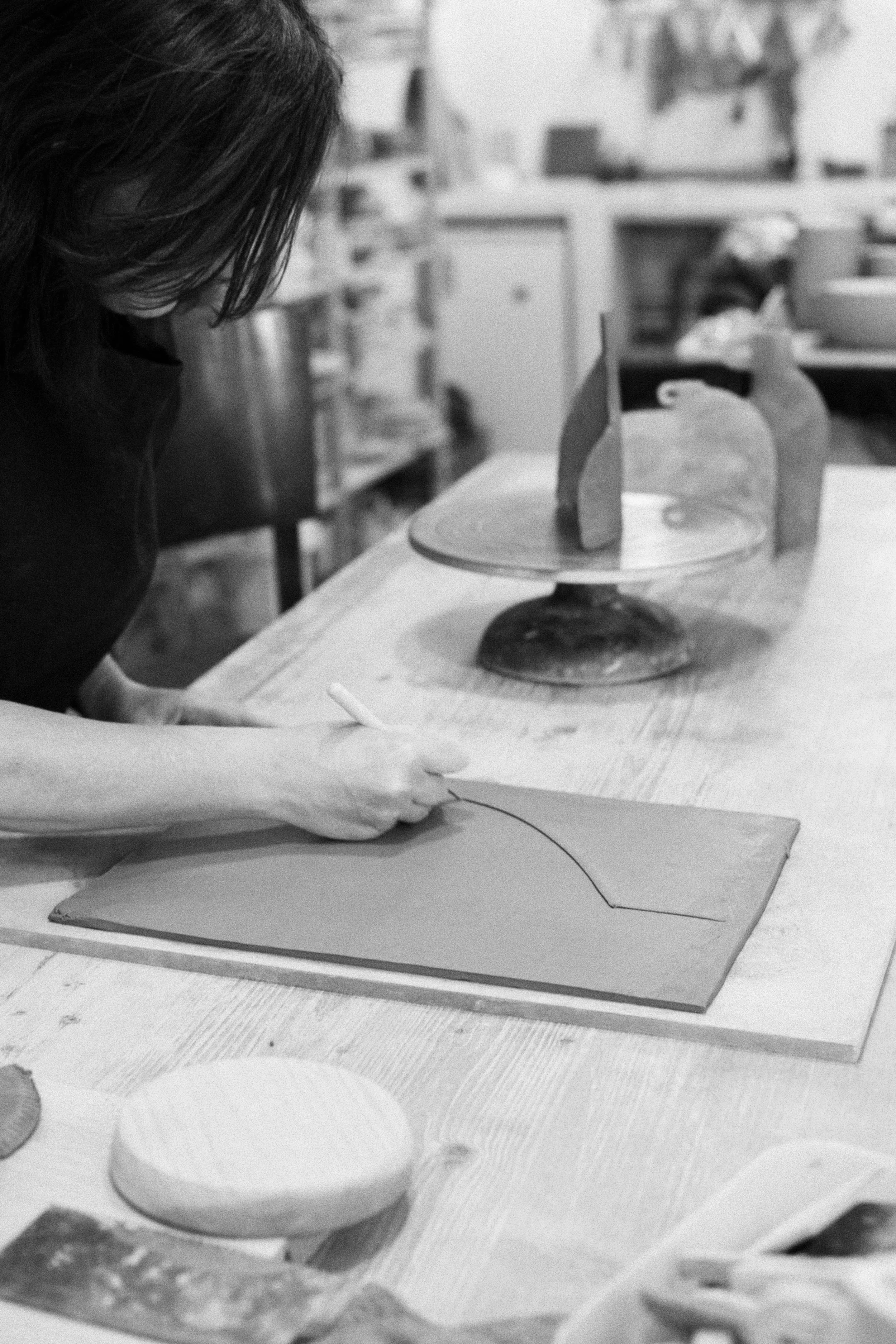
The process behind VASUM begins with a line: an asymmetrical silhouette conceived as a minimal gesture between drawing and object. From this initial contour, each piece emerges through reduction rather than accumulation, preserving the immediacy of the original form throughout the ceramic process. What starts as a flat outline slowly develops into presence, maintaining a direct relationship between gesture, surface and volume.
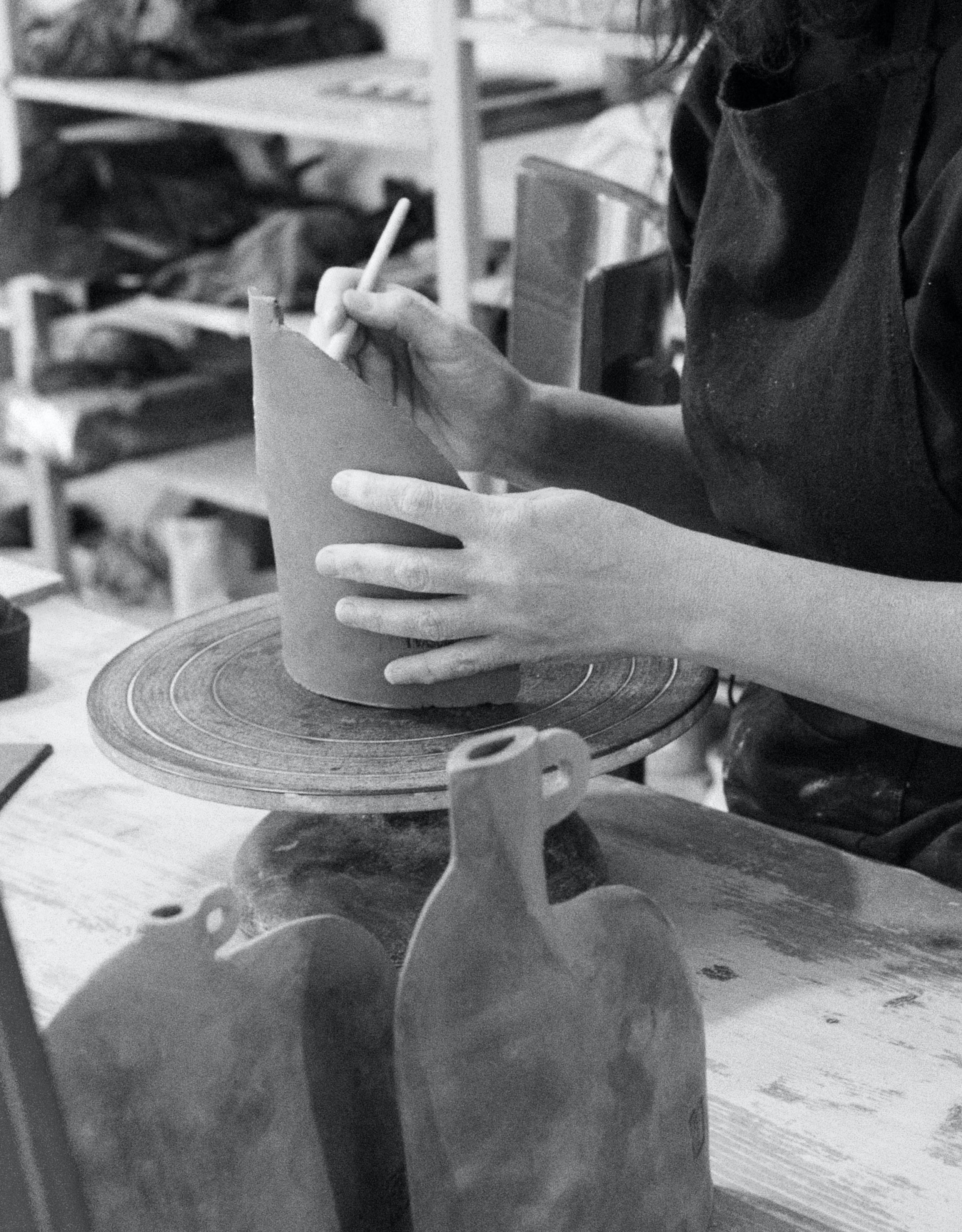
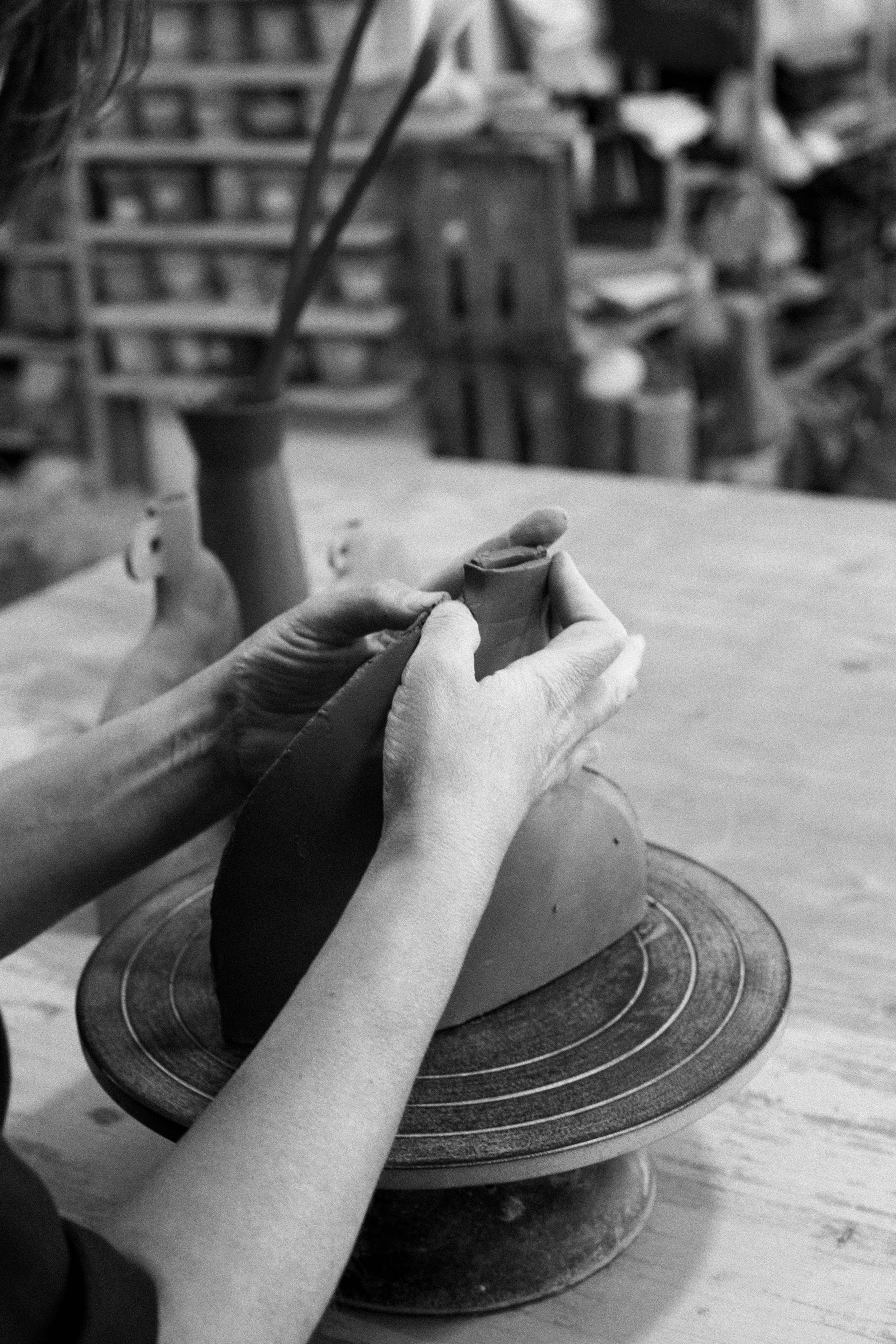
As the clay is shaped, the object gradually acquires depth while retaining a certain flatness and graphic quality, as if the form had been cut directly from a drawn profile. Rather than pursuing sculptural excess or monumentality, the work remains focused on a quieter tension between contour, proportion and material presence. Subtle asymmetries, irregular edges and restrained volumes allow each piece to feel suspended between vessel, fragment and composition.
Within VASUM, glaze is approached as an extension of the form itself rather than decoration. Matte, reflective, mineral or textured finishes are selected to reinforce the character of each silhouette without interrupting its clarity.
Surface becomes a way of revealing rhythm, density and tactility, allowing light and texture to interact differently with every object while preserving the formal restraint that defines the collection.
The resulting pieces inhabit space with a silent but distinct presence. Each one retains the subtle unpredictability of the ceramic process, allowing the material to preserve its own rhythm, texture and autonomy. In opposition to speed, repetition and overproduction, the work embraces slowness and permanence, proposing objects that invite contemplation rather than immediate consumption.